The Prior is (Almost) All You Need: Physics-Informed Bayesian Optimization for Process Systems Engineering
Abstract
Bayesian optimization (BO) has emerged as a powerful framework for accelerating design and discovery across a broad range of science and engineering applications, offering a principled way to guide experiments or simulations under uncertainty. Yet, when applied directly as a “black‑box” optimizer, its performance can be limited by how little prior structure it assumes about the underlying system. In reality, most problems relevant to the field of process systems engineering (PSE) – from molecular/materials discovery to process design and control – encode rich structure that can be leveraged through the right inductive biases, or priors. In this talk, I will introduce physics-informed Bayesian optimization (PIBO), which improves the efficiency and reliability of scientific decision-making by embedding domain knowledge in the surrogate model, constraints, and/or acquisition process. This includes directly guiding the selection of the most informative experiments/simulations to run next, especially in data-limited settings. I will present illustrative examples from bioreactor calibration, safe control of plasma medicine devices, and molecular property optimization, demonstrating how even relatively simple prior knowledge (e.g., network structure, positivity, feature sparsity) can significantly improve sample efficiency in practice. I will close with a perspective on some promising directions for future work including automated prior selection and extending BO to broader discovery-driven objectives. Together, these ideas reframe BO not as a one-size-fits-all optimizer, but as a flexible, physics-aware framework for accelerating many decision-making tasks in real-world PSE.
Speaker Bio
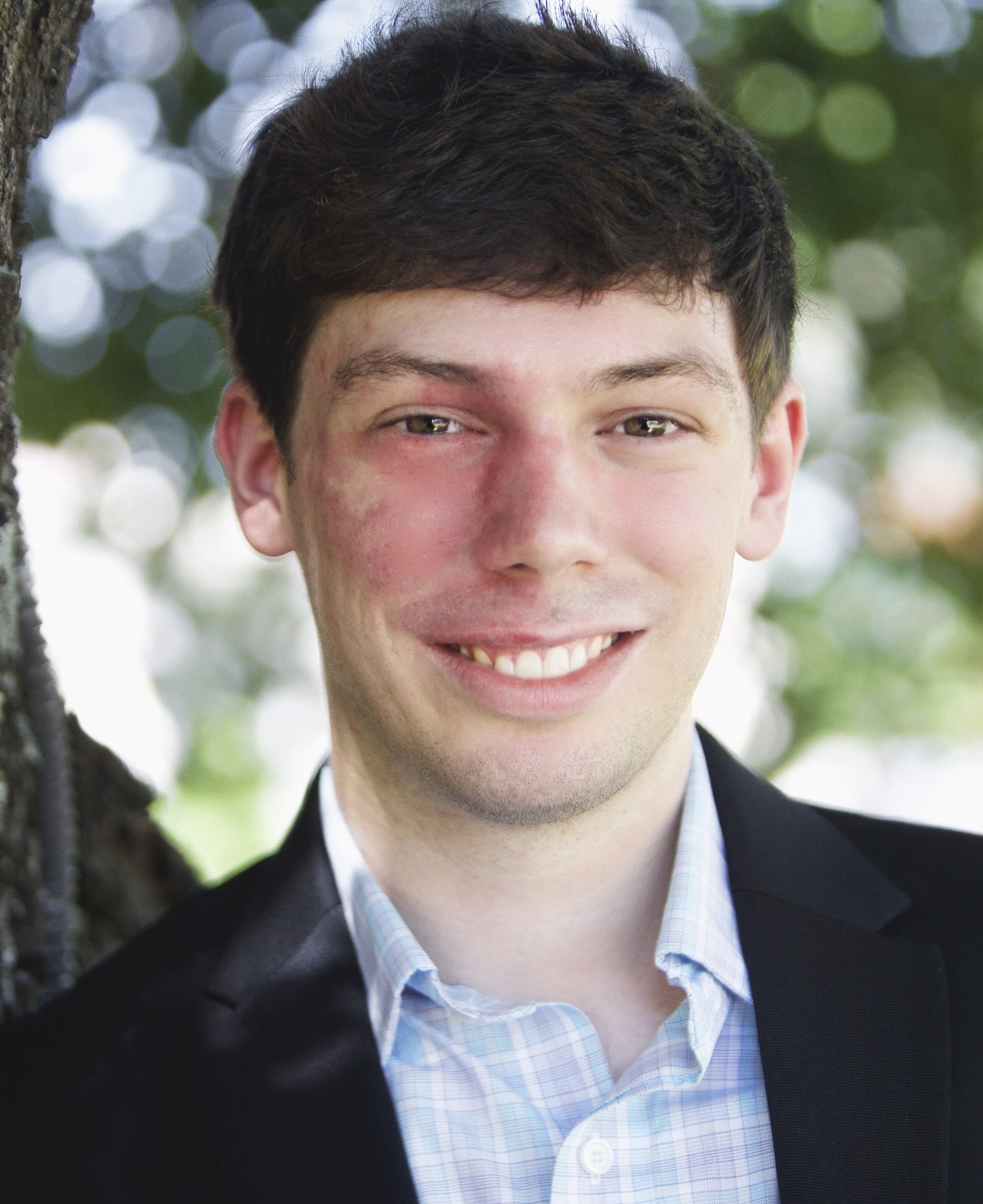
Joel Paulson is the Gerald and Louise Battist Associate Professor in the Department of Chemical and Biological Engineering at the University of Wisconsin-Madison. Prior to joining UW-Madison, he was a faculty member in the William G. Lowrie Department of Chemical and Biomolecular Engineering at The Ohio State University (OSU) from 2019 to 2025, where he held the H.C. Slip “Slider” Professorship. He holds a B.S. degree (with Highest Honors) from the University of Texas at Austin, and M.S.CEP. and Ph.D. degrees from the Massachusetts Institute of Technology (MIT), all in Chemical Engineering. After graduating from MIT, he completed a postdoctoral research appointment at the University of California, Berkeley, working in the area of systems and control theory. His current research interests are mainly in the areas of Bayesian optimization, scientific machine learning, and model predictive control. He is the recipient of several awards including the NSF CAREER Award, the AIChE 35 Under 35 Award, the IFAC World Congress Best Application Paper Prize, the Lumley Research Award, and the David C. McCarthy Engineering Teaching Award.